
BLOG | CONFIGURATION MANAGEMENT
The benefits of an integrated CMDB for service management sound promising – it enables us to create unified viewpoints, make better decisions, and ultimately manage our IT infrastructures more efficiently. However, as practitioners, you all know only too well that the path to improvement is often fraught with obstacles. This also applies to projects introducing a Configuration Management Database (CMDB).
Which challenges need to be overcome, what should be considered when selecting a tool, and which best practices can help ensure a successful CMDB implementation?
Challenge data silos
IT leaders and their teams face the daily challenge of efficiently managing a multitude of technologies, assets, and services – both internal and external. At the same time, they need to increase efficiency and improve service quality.
One of the biggest challenges in this context are data quality and the problem of data silos. IT infrastructure data typically reside in decentralized source systems, sometimes in redundant form, and are locally managed. The consequences of such data silos are predictable: often incomplete, partially outdated data, and limited access for different teams within the IT department. Data-driven planning, control, and decision-making processes in real-time remain a distant goal, as a consistent and complete picture of the IT infrastructure and its component relationships is lacking.
Without a unified, up-to-date view of the IT assets and service components required to deliver IT services, disparate ITSM teams are fighting windmills. In any case, they are falling short of their capabilities. The poor quality and availability of data in ITSM processes prove to be a showstopper for achieving higher IT maturity levels. Automating processes, and increasing service quality seem an insurmountable task.
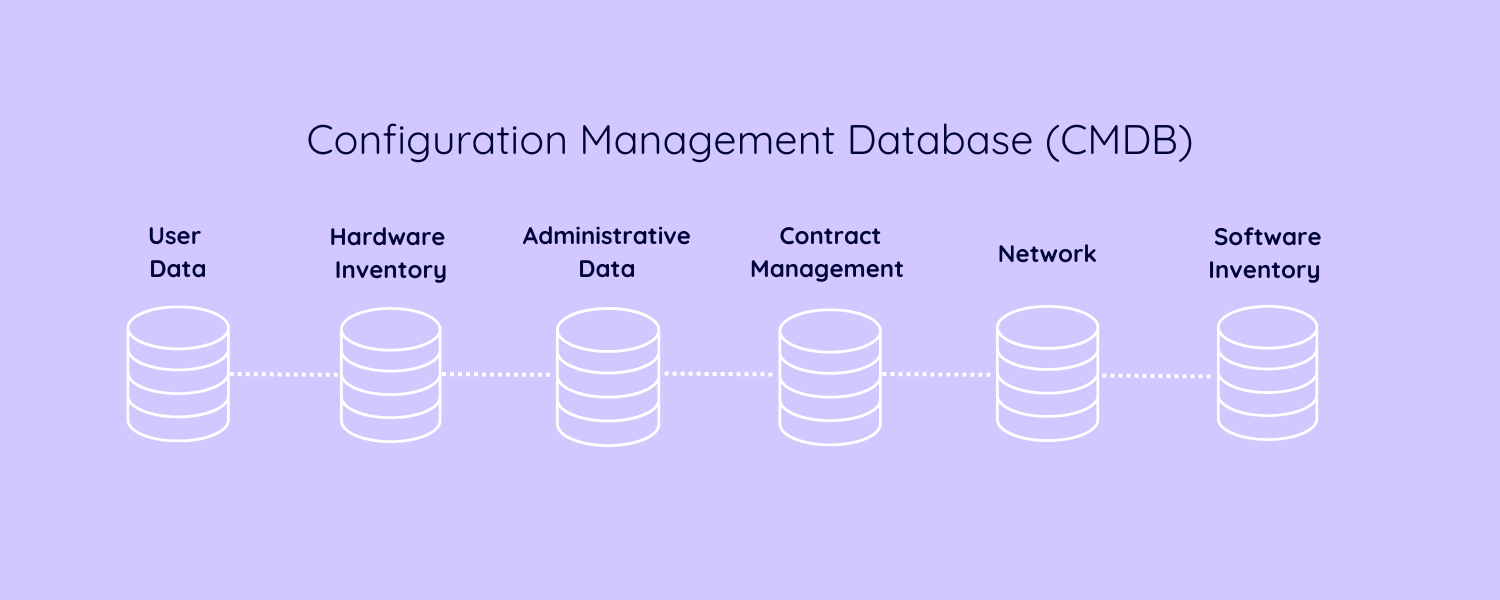
CMDB as the Foundation of Effective Service Management Strategies
In increasingly digitalized environments where organizations rely on complex IT infrastructures, effective service management strategies play a crucial role. An effective service management strategy is the key to smooth and efficient operation of our IT services. It ensures that we meet customer expectations while optimizing internal processes. Specifically, it means standardizing processes, introducing automation, and continuously improving the quality of our services.
An integrated CMDB plays a vital role in this context. It is the foundation on which our service management strategy is built. By providing a comprehensive and up-to-date view of our IT infrastructure in real-time, it enables us to make informed decisions across processes, plan changes more effectively, and resolve problems faster. The components of the IT infrastructure stored in the CMDB, known as Configuration Items (CIs), and their relationships with one another, form the foundation of our services.
The comprehensive view provided by the CMDB allows us to recognize dependencies and connections between different assets and services, plan changes more effectively, assess risks early on, and make more informed decisions. The CMDB is like the backbone of our IT department – strong, reliable, and indispensable.
Benefits of an Integrated CMDB for Service Management
An integrated CMDB offers a multitude of benefits for service management:
- Unified View: The CMDB provides all process-involved teams with a central platform for capturing and managing all IT assets and service components.
- Efficient Incident and Problem Management: By centrally storing current IT infrastructure data, incident and problem management processes can be accelerated, as relevant information is available more quickly.
- Effective Change Management: An integrated CMDB enables precise tracking of changes to IT assets and services. This minimizes risks and allows for better assessment of the impact on ongoing operations.
- Improved Asset Management: With an integrated CMDB, assets can be managed more efficiently, as all relevant information is stored in one place. This enables better planning of investments and optimization of asset lifecycle management.
- Process Optimization: A unified and up-to-date data basis enables the automation of service processes to reduce errors and increase efficiency.
Best Practices to Consider When Introducing a CMDB
Introducing an integrated CMDB can be complex. All the more reason to consider some best practices during implementation:
- Set Clear Goals: Establish specific objectives and outcomes for introducing a CMDB in your organization.
Conduct Thorough Process Analysis: Evaluate existing processes thoroughly to identify areas for improvement and automation. - Ensure Data Quality: The quality of data stored in the CMDB is crucial for its usefulness. It’s essential to ensure that the data is accurate and up-to-date, providing a reliable basis for decision-making.
- Process Integration: The CMDB must be tightly integrated with other service management processes to realize its full potential. This requires careful planning and alignment of various processes, such as incident management, problem management, change management, and service asset and configuration management.
- Change Management: Introducing a CMDB often means changes in the organization and working methods for employees. It’s essential to use change management practices to overcome resistance and ensure a smooth transition.
- Choose the Right Tools: An integrated CMDB has the advantage of being developed around your service management solution, ensuring seamless integration with other ITSM disciplines, processes, and functions. Since data often resides in decentralized data sources and is managed there, make sure that these data sources can easily connect to the CMDB.
- Phased Implementation: Introducing a CMDB is a complex project. Therefore, roll out the CMDB in phases, starting with critical IT services and assets.
- Training and Adoption: With comprehensive training, ensure broad acceptance of the CMDB across all teams.
OTOBO 11.0 and the Fully Integrated Configuration Management Database (CMDB)
The release of OTOBO 11.0 (May 2024) provides you with a completely revamped Configuration Management Database (CMDB) that is integrated into the IT service management processes. Predefined CI classes facilitate the adoption of data and ensure rapid deployment readiness.
Open interfaces for integrating third-party systems via REST/SOAP API, web services, or the database layer make the OTOBO CMDB a central data hub, enabling you to provide your service teams with all relevant asset data in real-time, across processes and beyond IT.
WANT TO KNOW MORE ABOUT CMDB

